


Skillrung

Small businesses, owners and the self-employed

Digital skills courses for small business owners: deciding, demanding, training the team

In brief

In a business of fewer than fifty people, the owner decides alone about IT, the contractor, the insurance and the training of the team, with no technical department to work up the file. They are also the person whose identity gets impersonated to obtain a bank transfer. Skillrung courses for owners cover both of those roles: what has to be decided, and what you need to be able to spot yourself.

Updated on Reviewed by Skillrung teamReview by a subject-matter expert under way

Recommended courses

What we recommend to small business owners

The first four slides of every course are free, with no account and no bank card. From the fifth onwards, a subscription is required.

You are the one who decides, and the one whose name gets borrowed

So-called CEO fraud does not target large groups by preference: it targets organisations where a single signature is enough, and where the owner is visible enough to be imitated. Their name is on the website and in a public register, their style is learnt from three messages, their voice from a short video. The message arrives on a Friday afternoon, invokes a confidential deal, presses, and asks for a transfer. The courses treat that as a problem of organisation: above an amount you set, a payment requires two approvals and a call back on a known number — including when you are the one asking.

What the rules push down onto a business of ten people

Few owners of very small businesses know what actually applies to them, and the confusion is expensive in both directions: you believe you are out of scope when you are not, or you impose constraints designed for large groups. Three texts shape the situation. The European data protection regulation applies as soon as there are customers or employees, with no headcount threshold. The European cybersecurity directive directly covers only certain entities, but comes back down by contract onto their suppliers. The European artificial intelligence regulation requires a sufficient level of AI literacy from the people who use these systems.

What to demand in writing, from the contractor and from the insurer

Most owners have an IT contractor and an insurance policy, and very few know what each of them covers. The courses turn that grey area into written questions, asked before the incident. To the contractor: how often backups are taken, when a restoration was last tested, who holds an administrator account, what response time is guaranteed, what becomes of the data if the contract ends. To the insurer: what is covered, what is excluded, which measures the cover depends on. Those answers fit on one page and take a morning to get. Not having them is always discovered at the worst moment.

Training the team without stopping the business

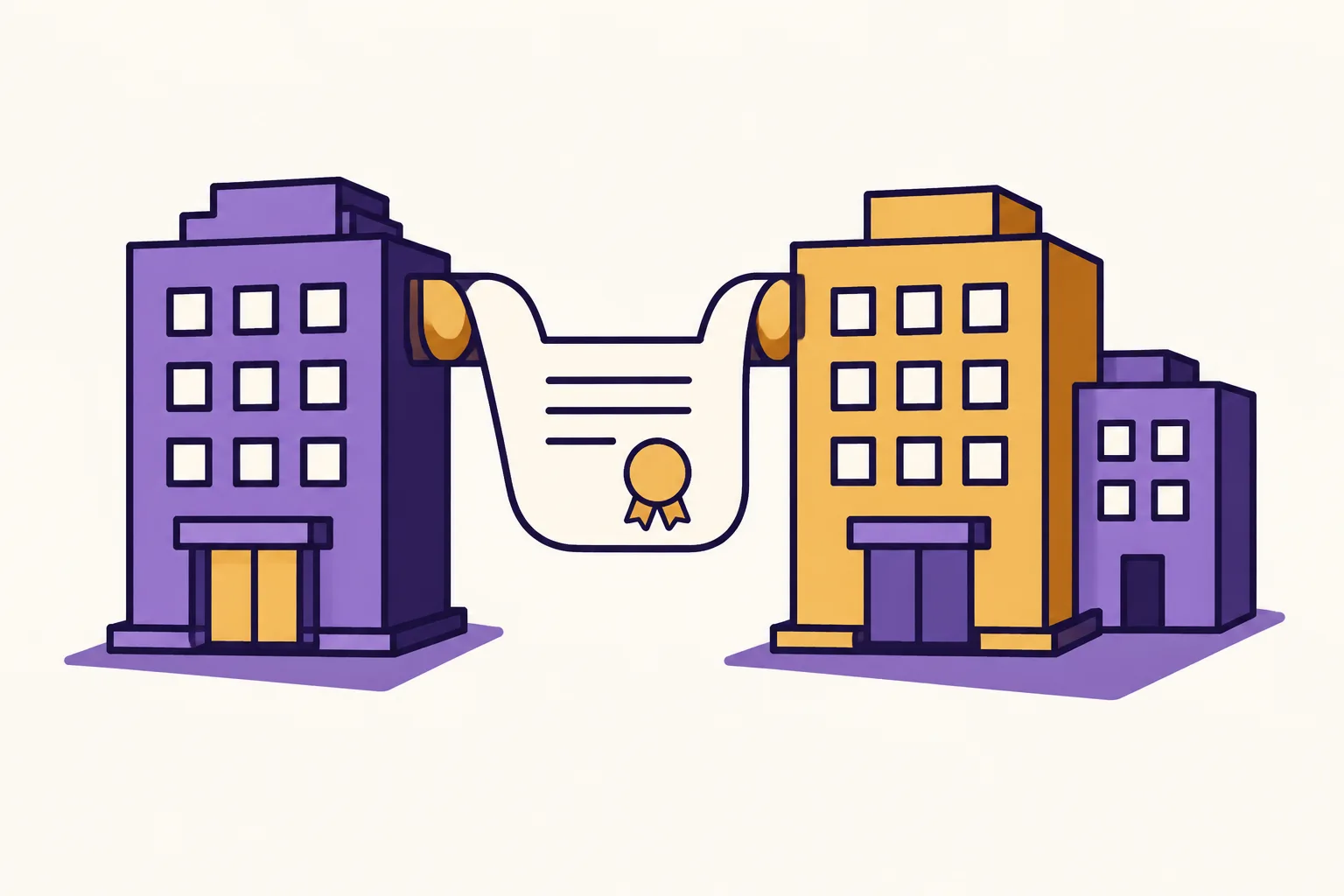
The owner of a very small business has neither the time nor the means to take the whole team out for a day. The format answers that constraint: short slides, section quizzes, the option to pick up again at any moment, and examples drawn from each person's own job. The first four slides of every course and the Beginner level quiz are open without a subscription: you measure your team's real level before committing any spending. Every pass issues a certificate in your name, dated and verifiable online — the document some contracting clients and insurers now ask for.

Sources

What the official text says

Every figure or legal statement on this page points to its primary source, with its date. We publish no figure without a verifiable source.

Frequently asked questions

What small business owners ask us

I have no IT person: where do I start?

With three decisions that need no technical skill. A backup kept offline whose restoration you have seen succeed. Two approvals for any payment above an amount you set. Two-factor authentication on the mailbox and on the tools that hold your data. The rest comes afterwards, and can be delegated.

Does the NIS2 Directive really concern my very small business?

Rarely in a direct way: it covers entities determined by their sector and their size. It does reach you through your customers, however, who are required to address the security of their supply chain. In practice that takes the form of questionnaires and contract clauses you have to be able to answer if you want to keep the contract.

Does my insurance cover a cyberattack?

That depends on the contract, and the cover is often conditional on specific measures: backups, updates, stronger authentication. The question is put to your insurer in writing, before the incident. The course gives you the exact list of points to have clarified and the vocabulary to put them in.

Do I have to train my employees in artificial intelligence?

If your business deploys AI systems, the European regulation requires you to ensure a sufficient level of AI literacy among the people who use them. Beyond the obligation, the benefit is immediate: a team that knows what a model must not be given, and how to proofread what it produces, avoids leaks and expensive mistakes.

How long does it take to train a team of ten?

Each course takes one to two hours to work through, section by section, at moments each person chooses. No session to organise, no travel. The quiz of the day then offers a few spaced revision questions so that the habits hold over time, without taking another whole hour.

Free or paid

What you can read without paying

The rule is the same for every job, for an anonymous visitor as for a free account.

No payment, no account

What is free

  • The first four slides of every course, with no account
  • The standalone free quizzes and every guide, with your score
  • The standalone free quizzes and all the guides
  • Course pages, job pages and topic pages

Creating an account unlocks no extra slide. A free account is there to keep your progress, your job and your quiz results.

With the subscription

What is paid for

  • Every published course, at no extra cost
  • Examples and scenarios adapted to your job
  • Section quizzes, without limit
  • The three levels: Beginner, Intermediate, Expert
  • A named, verifiable certificate of achievement, valid for 12 months
  • The daily revision, so you do not forget what you have learned
  • Your progress, your XP, your badges and your day streak

The first four slides of every course are free, with no account and no bank card. From the fifth onwards, a subscription is required.

Not small business owner?

This page covers one specific job. Pick yours: the course examples become your own. Nothing is saved until you confirm.

Nothing is saved until you confirm. You can change your choice at any time.

Kept for 180 days in a preference cookie, set only when you confirm. It adapts the examples and unlocks no content.

Already told us your job elsewhere on the site? This page always shows the one in its address: see the courses for my job.

Neighbouring jobs

The other jobs in the “Small businesses, owners and the self-employed” family, with the same courses and personalisation of their own.

Keep going on Skillrung

The pages that follow on from this one, in the recommended order.