





Skillrung

Industry, construction and trades

Digital skills courses for skilled tradespeople: quotes, customer file and transfer fraud

In brief

A skilled tradesperson holds their customers' addresses, sometimes their entry codes, and sends out quotes and invoices carrying their own bank details every week. The whole business rests on quoting software, a phone and a mailbox. Skillrung courses for tradespeople start there: protecting the customer file, verifying a change of bank details, and carrying on invoicing the day the computer is locked.

Updated on Reviewed by Skillrung teamReview by a subject-matter expert under way

Recommended courses

What we recommend to skilled tradespeople

The first four slides of every course are free, with no account and no bank card. From the fifth onwards, a subscription is required.

Your customers trust you with their address, their keys and their codes

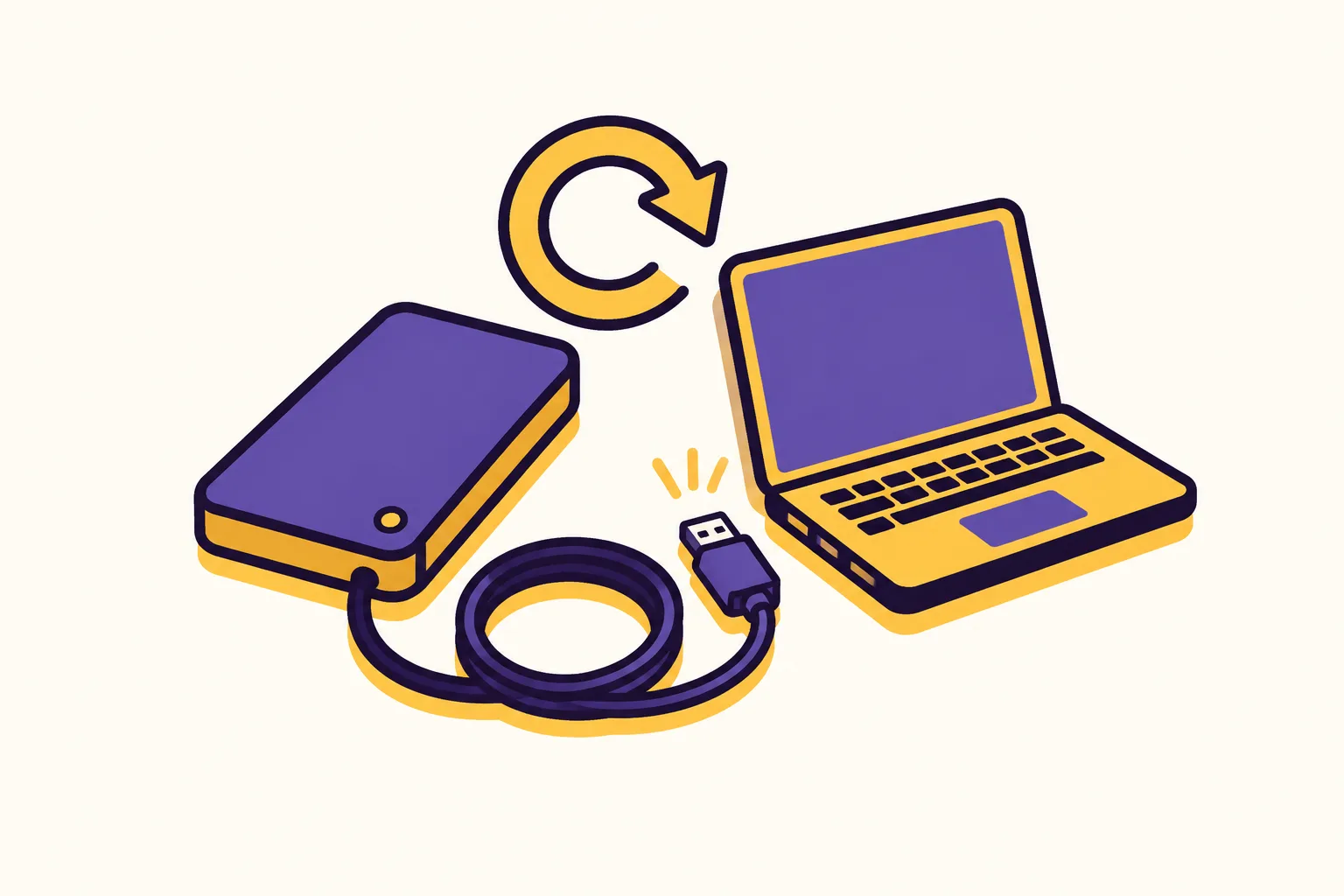
A building tradesperson's customer file is not an ordinary sales list. It holds precise addresses, the code for a gate, the location of a meter, photographs of the inside of people's homes, and sometimes a note of when the occupants are away. That file has value to people other than you, and it lives in quoting software, a mailbox and a phone that travels from site to site. The courses treat it for what it is, with habits sized for a business of a few people: a long password used nowhere else, two-factor authentication, an encrypted phone, a backup that is not permanently plugged in.

A change of bank details: the most profitable fraud in the building trade

The scenario is always the same and it always works. A regular supplier announces a change of bank details. A customer receives your invoice, altered after your mailbox was intercepted. A hurried new customer asks for a quote, then pays a deposit into an account that is not yours. None of these attacks is technical: they exploit a habit, the approval of a payment by one person alone, and urgency. The phishing course installs a rule you can pin up in the workshop: every change of bank details is checked by telephone, on a number you already know, before any transfer at all.

A building site is not an office

A tradesperson's digital tool is a phone, used outdoors, on scaffolding, in a van, on a customer's wireless network. It holds the drawings, the photographs, the quotes in progress and access to the mailbox. It gets dropped, stolen along with the vehicle, lent to an apprentice. The courses give the settings that make a loss bearable: a long unlock code rather than a pattern, encryption switched on, remote wiping prepared before the incident rather than after it. They also deal with site photographs, which count as evidence in a dispute and vanish with the device.

One computer, one piece of software: the stoppage is total

In a trades business there is one of everything: one computer, one quoting package, one accountant, one person who knows where the files are. Ransomware or a failed disk stops the invoicing, and therefore the cash flow, while the sites carry on. The course “Cybersecurity: the fundamentals” builds a recovery sized for that: a backup kept offline and restored at least once, the contact details of the software vendor and of the insurer written down away from the computer, and the list of what has to be redone first.

Sources

What the official text says

Every figure or legal statement on this page points to its primary source, with its date. We publish no figure without a verifiable source.

  • Since 1 September 2026, every business subject to VAT must be able to receive electronic invoices transmitted through an approved platform.

    Source : Facturation électronique entre entreprises : ce qui change : Service-public.gouv.fr, Direction de l'information légale et administrative, 7 août 2026.

  • The controller implements appropriate technical and organisational measures to ensure a level of security appropriate to the risk (Article 32 of the GDPR).

    Source : Règlement (UE) 2016/679 (RGPD), article 32 : Journal officiel de l'Union européenne, 27 avril 2016.

Frequently asked questions

What skilled tradespeople ask us

Are tradespeople really targeted by cyberattacks?

You are targeted because you are reachable, not because you were chosen. The campaigns are automatic and hit every address they find. A trades business also offers two sought-after features: one person approves the payments on their own, and the work cannot stop, which pushes people to give in quickly.

A supplier is telling me by email that its bank details have changed: what do I do?

Change nothing, and call that supplier on the number you were already using, never on the one given in the message. It is the only check that works, because it goes through a channel other than the one carrying the request. Until that call has happened, the transfer goes to the old account or it does not go at all.

Can I keep site photographs on my personal phone?

Technically yes, but those photographs count as evidence in a dispute and often show the inside of a customer's home. They deserve a locked and encrypted device, a copy somewhere other than the phone, and deletion once the job is settled and the warranty period has run out. The course goes through those settings step by step.

My quoting software is “in the cloud”: am I safe?

You are protected against a failed disk, not against a compromised account. If your password gets out, the attacker reaches everything, from anywhere. Two-factor authentication on that account, a password used nowhere else, and a regular export of your own data are the three measures that genuinely count.

Does electronic invoicing apply to me?

Every business subject to value added tax has had to be able to receive electronic invoices since 1 September 2026, the obligation to issue them arriving afterwards according to the size of the business. The dedicated course explains the applicable timetable, the role of the approved platforms, and the statements to correct on your invoices.

Free or paid

What you can read without paying

The rule is the same for every job, for an anonymous visitor as for a free account.

No payment, no account

What is free

  • The first four slides of every course, with no account
  • The standalone free quizzes and every guide, with your score
  • The standalone free quizzes and all the guides
  • Course pages, job pages and topic pages

Creating an account unlocks no extra slide. A free account is there to keep your progress, your job and your quiz results.

With the subscription

What is paid for

  • Every published course, at no extra cost
  • Examples and scenarios adapted to your job
  • Section quizzes, without limit
  • The three levels: Beginner, Intermediate, Expert
  • A named, verifiable certificate of achievement, valid for 12 months
  • The daily revision, so you do not forget what you have learned
  • Your progress, your XP, your badges and your day streak

The first four slides of every course are free, with no account and no bank card. From the fifth onwards, a subscription is required.

Not skilled tradesperson?

This page covers one specific job. Pick yours: the course examples become your own. Nothing is saved until you confirm.

Nothing is saved until you confirm. You can change your choice at any time.

Kept for 180 days in a preference cookie, set only when you confirm. It adapts the examples and unlocks no content.

Already told us your job elsewhere on the site? This page always shows the one in its address: see the courses for my job.

Neighbouring jobs

The other jobs in the “Industry, construction and trades” family, with the same courses and personalisation of their own.

Keep going on Skillrung

The pages that follow on from this one, in the recommended order.